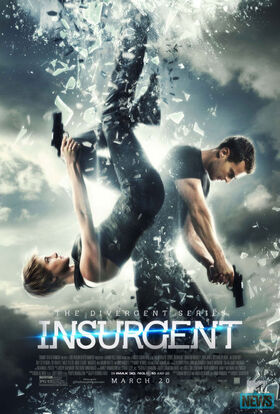
Anatomy of a Scene: ‘Divergent’
Neil Burger narrates a scene from his film starring Shailene Woodley.
Women warriors are on the rise again in American movies, and so, too, are hopes that they’ll be able to strike where it counts: in the industry’s executive suites.
Some of this faith can be traced, irrationally or exuberantly, to “The Hunger Games.”
Its second installment, “Catching Fire,” wasn’t only the highest grossing movie of 2013, it also pulled in a lot of guys, and not just, you know, women, that 52 percent of North American moviegoers who are deemed a limited demographic, a niche and a seemingly unsolvable problem. That no one would ever frame male-driven franchises like “Iron Man,” “Spider-Man” and “The Dark Knight” as niche attractions helps explain that problem.
So, yea for “Divergent,” a dumb movie that I hope makes major bank if only as a reminder of the obvious: Women can drive big and little movies, including the pricey franchises that fire up the box office and the culture.
To do so, though, they’re going to need directors who can handle the demands of an industrial production like this and a script that obscures rather than emphasizes the weakness of the source material. A good action choreographer will be crucial, as will decent hair and makeup.

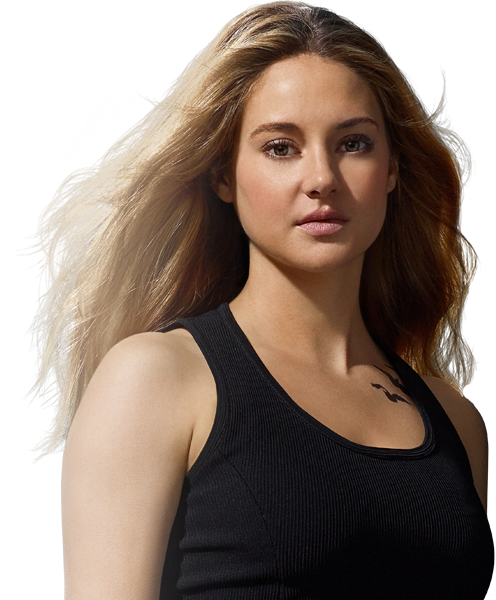
That the length of Shailene Woodley’s eyelashes changes throughout “Divergent” may have been amusingly distracting for a while (maybe they’re mood lashes, a friend quipped), but such shoddiness also underscores the contempt that movie companies have for the medium and the audience.
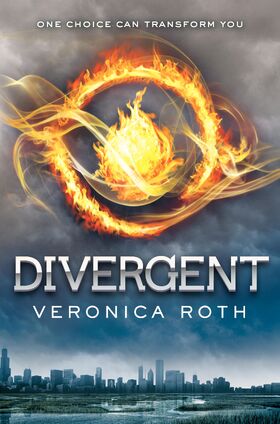
Veronica Roth, who wrote the book “Divergent” and its two hot-selling follow-ups, tends to avoid mentioning “The Hunger Games,” but the similarities between these young-adult juggernauts are conspicuous in the extreme. “The Hunger Games” is a dystopian tale set in a postwar North America divided into 13 districts; “Divergent” is a dystopian tale set in postwar Chicago divided into five factions. Each series pivots on a gutsy teenage heroine who fights to the death like a classic male hero. Each year, the young characters in the books undergo a weird ritual: In “The Hunger Games,” wee ones are sent into mortal combat; the initiation ritual in “Divergent,” much like the book itself, is rather more anticlimactic, because teenagers just choose which faction to grow old in.

Movie Review: ‘Divergent’
The Times critic Manohla Dargis reviews “Divergent.”
There is a crucial difference: While Katniss Everdeen doesn’t make much room for romance in “The Hunger Games” (she has a revolution to lead), Tris Prior spends a whole lot of time wondering why her instructor pays attention to her. He’s a guy, as if you didn’t know, because while “Divergent” celebrates individuality and breaking out of the little boxes that its authoritarian leaders (i.e., adults) insist on putting teenagers in, the story sticks to the familiar gendered template. Girl warrior meets boy warrior and, in between punches, kicks and bullets, they hold hands. One of the few real surprises in the “Divergent” novel is that it’s nearly as chaste as the “Twilight” series, although Ms. Woodley and her romantic foil, Four (Theo James), do open wide during several kisses.

Advertisement
They make a fine duo. They’re easy on the eyes, for one, and Ms. Woodley has a gift for conveying a sense of genuine, deep-tissue sincerity, while Mr. James, whose slashing cheekbones look as if they could do some serious damage, is good at keeping a straight face. (He’s had practice: Until now, he was best known for croaking in Lady Mary’s bed in “Downton Abbey.”) The characters trade many moony looks as well as spit, but their cute, farcically overdetermined match — he thrusts with penetrating stares, while she parries by retreating and looking at her feet or a wall — grows wearisome when it becomes clear that there’s not much else going on. Lots of things happen, of course, as per the dystopian rule book, but for all the jumping and scaling of heights, the movie remains grounded.

The story, adapted by Evan Daugherty and Vanessa Taylor, opens with Tris living with her family in Abnegation, a faction whose inhabitants have embraced selflessness to the point of pride and who wear drab, flowing clothes that suggest that Eileen Fisher managed to survive Armageddon. Tris, however, yearns to run wild with Dauntless, a faction that puts a premium on courage, fearlessness, piercings, tattoos and hair gel. Each faction — the others are Amity, Candor and Erudite — lives according to restricted values in order to keep the peace and considers an outlier like Tris, called Divergent, as a threat. It doesn’t make any sense, but Ms. Roth’s prose style is good enough and Tris appealing enough that, at least in the book, it’s easy to breeze past the plot holes.
It’s harder to ignore those flaws in the movie, partly because the director, Neil Burger (“Limitless”), gives you little to hang onto — beauty, thrills, a visual style. The script, or what’s left of it, doesn’t help, because someone (it’s impossible to know who merits most of the blame in a big enterprise like this) has made the familiar blunder of thinking that the most important thing in adapting a book to the screen is the stuff that happens rather than to whom it happens. That the Dauntless inhabitants like to jump on and off moving trains or clamber up buildings like monkeys isn’t interesting or novel. What matters is how thrillingly free and alive Tris feels when she hurtles across an abyss or zip-lines over the ruined city. “Fear doesn’t shut you down,” Four tells Tris, “it wakes you up.”
You have to take his word for it. It’s hard not to root for Ms. Woodley, who has been coming on strong in recent indie titles like “The Descendants” and“The Spectacular Now,” but she seems palpably uncomfortable here. There’s a tentative, awkward quality to her physical performance that at times registers as a lack of confidence and that, as the story progresses, is badly at odds with her character’s intensifying ferocity. That hardly seems like Ms. Woodley’s fault, given that she’s ill-served by the production on so many levels, from the fight choreography to the dialogue and those eyelashes. But it’s finally galling because women will never break out of the representational ghetto they’ve been relegated to if you watch a movie like this one and think that the heroine, metaphorically and otherwise, throws like a girl.
“Divergent” is rated PG-13 (Parents strongly cautioned). The old dystopian woes and violence.